
FondPix
Wedding Photo Poses That Look Natural in Real and AI Wedding Pictures
A practical pose guide for couples creating wedding photos, bridal portraits, and invitation images.
FondPix creates two high-quality watermarked previews so you can see both portraits before deciding whether to keep them. If neither portrait feels right, you can leave the project unpaid. A one-time payment keeps these same two high-quality files without watermarks; it never creates replacement images.
Wedding photo poses fail when they ask people to perform a feeling they do not have. The best poses give the couple something simple to do: stand close, walk slowly, hold hands, look at each other, or turn toward the light.
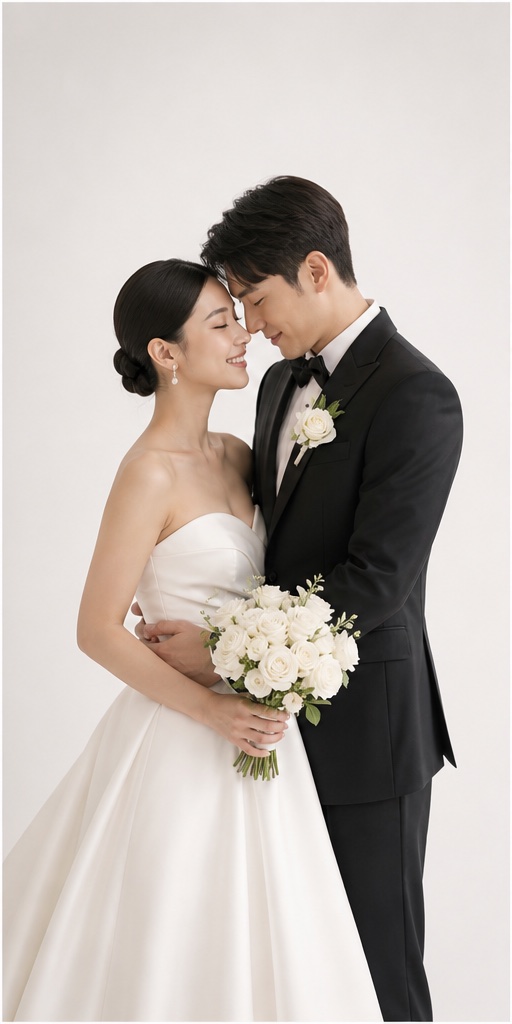
This guide works for real photo shoots and AI wedding photo planning.
The Safe Starting Poses
Use these when you want reliable wedding pictures without awkward body language.
The shoulder-to-shoulder portrait is the safest formal pose. Both people face the camera, shoulders angled slightly inward, hands relaxed. It works for invitations, family sharing, and frames.
The hand-hold walk is better for romantic outdoor scenes. Ask for a slow walk, natural posture, and a dress with light movement. This prevents the image from looking stiff.
The forehead-close pose is useful for announcements. It feels intimate without requiring a dramatic kiss. Keep the background simple so the faces carry the photo.
The seated portrait works for editorial and luxury wedding pictures. One person seated, one standing or leaning close, with clear posture and balanced height.
The back-view destination pose works when the location matters. Use it carefully because faces may not be visible. It is best as an album spread, not as the main invitation image.
Poses for Invitations
Photo wedding invitations need clean shapes. Avoid crossed arms, busy hand placement, and extreme movement. The best invitation poses are:
- Standing together, both faces visible.
- Sitting close with a clean background.
- Holding hands with space for text.
- Slight turn toward each other.
- Bouquet held low, not covering the dress or face.
If you use FondPix, add “invitation-ready crop” and “clean negative space” to your prompt.
Poses for Albums and Prints
Albums need variety. Use one formal portrait, one walking image, one close crop, one wide scenic image, and one detail-style portrait. A framed print usually benefits from a simpler composition and stronger eye contact.
For prints, do not overuse tiny background details. They can look good on a phone but distract on paper.
How To Prompt Poses
A weak prompt says:
beautiful wedding pose
A better prompt says:
realistic wedding portrait of the uploaded couple, standing close together, bride holding a small white bouquet at waist level, groom angled slightly toward her, soft studio light, clean cream background.
The second version gives the generator body position, hand placement, lighting, and use case.
Common Pose Problems
If hands look strange, simplify the pose. Ask for hands held together, bouquet held low, or hands relaxed at the sides. If the couple looks too far apart, ask for “close natural posture” and “shoulders angled toward each other”.
If the image feels too stiff, use movement: walking slowly, dress moving lightly, turning toward each other, or laughing naturally. If it feels too casual, use formal posture, black-tie styling, and studio lighting.
Pose Prompt Shortcuts
Use these short phrases when a result feels awkward:
- “hands relaxed and natural” when fingers become distracting.
- “bouquet held low at waist level” when flowers cover the dress or face.
- “standing close with shoulders angled toward each other” when the couple feels disconnected.
- “slow walking pose with light dress movement” when the image is too stiff.
- “clear face lighting and natural expressions” when cinematic lighting hides identity.
Small pose instructions usually work better than asking for a completely new scene.
Match Pose to Style
Classic studio: standing together, seated portrait, clean full-body pose.
Romantic garden: hand-hold walk, forehead-close pose, veil movement.
Luxury hotel: seated editorial, staircase portrait, black-tie standing pose.
Cinematic: walking at night, first dance movement, dramatic backlight.
Cultural wedding: formal posture, ceremonial symmetry, garment details visible.
Destination: wide scenic pose, walking portrait, back-view landscape image.
If you are still choosing the overall scene, start with wedding photo ideas.